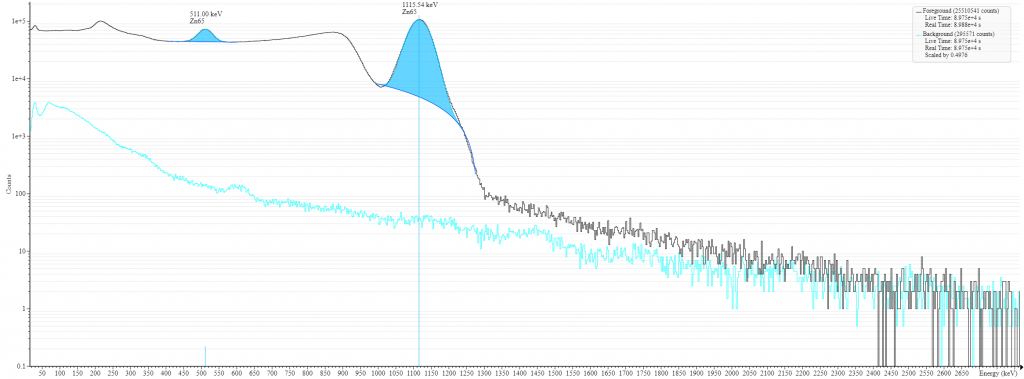
One of the activities I enjoy most in my new found hobby with my Radiacode is to gather spectra on various sources. I decided to get a 103G to dedicate exclusively to gathering spectra and use the 110 for low activity sources, surveying, and mapping. Recently, I have been gathering various Radionuclide Calibration Sources from Spectrum Techniques to build up my spectrum collection.
So far, I have six different sources at 1 µCi each. I wanted to get deep spectra on each of the sources to use for calibrating my 103G. Over Christmas, I gathered spectra on each of my sources with long integration times.
103G Calibration
After gathering all of the data, calibration begins. Using the technique provided by Ionization Radiation Lab, using the excellent Becqmoni, I used Cs-137 and Na-22 for calibration. Specifically the following energies:
Cs-137 – 32 and 662 KeV
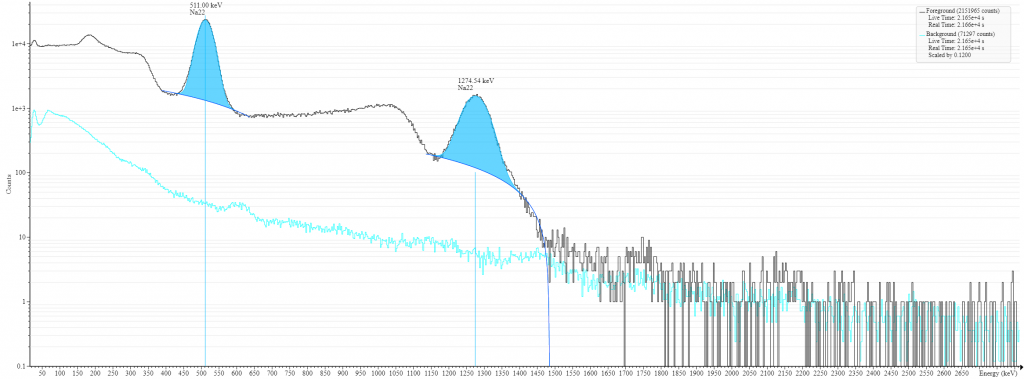
Na-22 – 511 and 1274 KeV
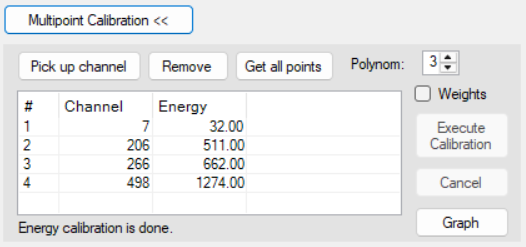
This should give me a good initial calibration in the low to mid energies. The result was the following graph and energy calibration numbers. In the graph, you can see that the line is trending upwards. I will need to get higher energies to get it to straighten out for better linearity.
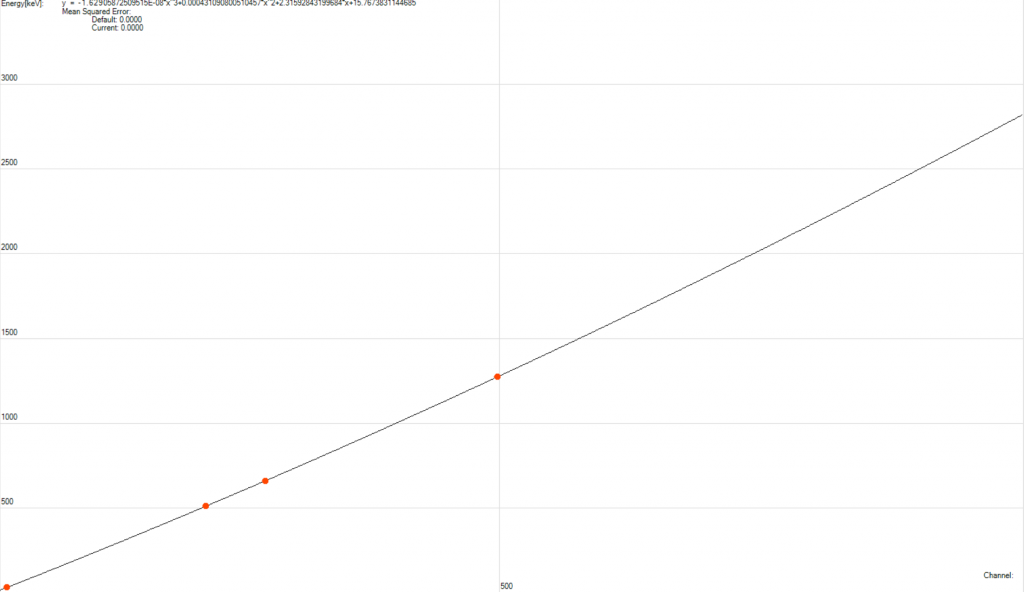
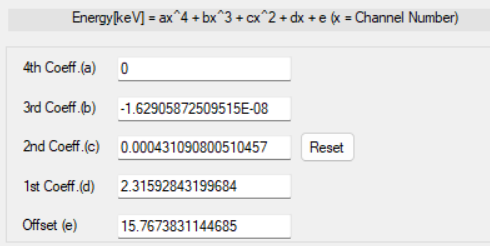
Looking at the numbers, they look pretty good on each of the files with percentages below 1%. I consider this a good first calibration, however, I do plan to further refine these in the near future for the higher energies, following more closely the procedure recommended using the Thorium Welding Rods and other sources. Once I do that, I would like to use Eu-152 to really dial it in.
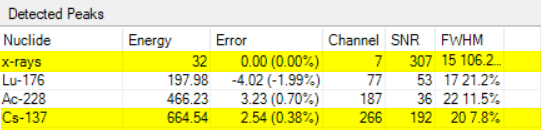
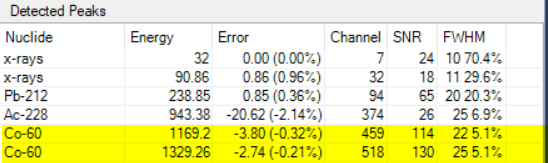
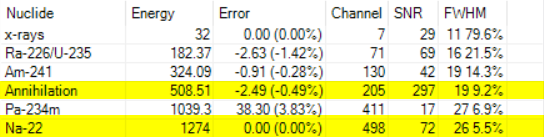

One thing to note is that the Cs-137 FWHM is 7.8% which is pretty close to the specifications of the Radiacode 103G of 7.4% ±0.3%.
What is next?
My next set of sources is going to be Co-57 and Mn-54 in the near future to add to the collection. As mentioned previously, I want to concentrate on the higher energies using other sources.
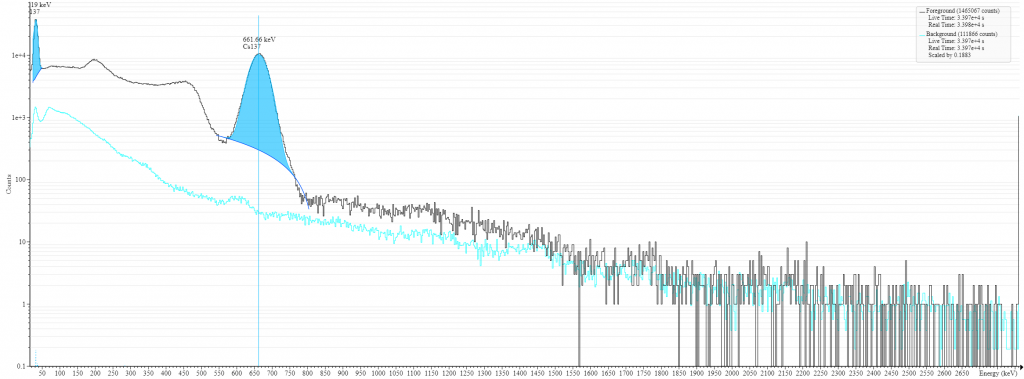
Cs-137
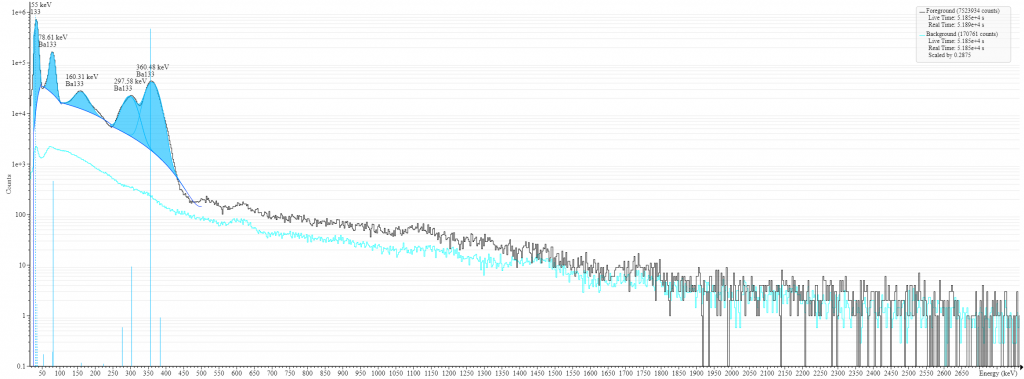
Ba-133
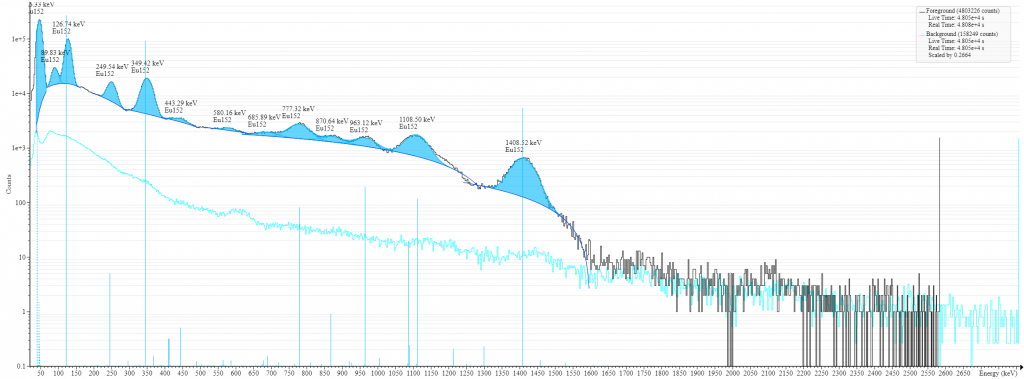
Eu-152
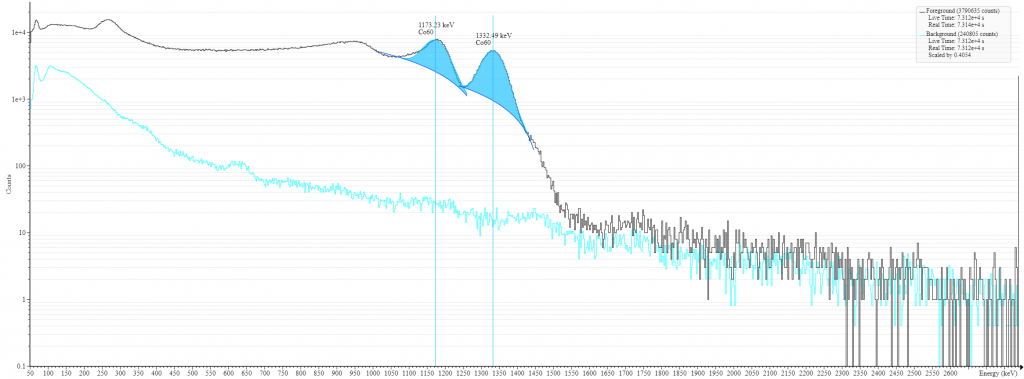
Co-60
Na-22
Zn-65